

Apartment Power Outage in Texas: What Are Your Rights?
A power outage in a Texas apartment can be more than an inconvenience, especially during Houston’s heat, severe storms, or winter weather. Your rights depend heavily on why the electricity is off, who controls the utility, and what your lease says. Texas law treats a landlord-caused utility shutoff differently from a storm-related grid outage. This guide explains what renters should do first, when a landlord may be responsible, what remedies may be available, and how to document the problem.
Quick Answer
If your Texas apartment loses power, first determine whether the outage affects the neighborhood, the building, or only your unit. Report a utility outage to the appropriate electric utility and notify your property manager or maintenance team. Texas law generally prohibits a landlord from intentionally interrupting utilities except in specified circumstances such as repairs, construction, or an emergency. If the landlord unlawfully caused the shutoff, additional legal remedies may apply. A storm or utility-company outage does not automatically create a right to a rent refund or hotel reimbursement.
Start by finding out who caused the outage
The most important question is whether the problem is with the electric utility or the apartment property.
Check whether hallway lights, exterior lights, elevators, or neighboring units also have power. If the entire property or surrounding neighborhood is dark, the outage may be with the local transmission and distribution utility. If only your apartment is affected, the problem may involve a breaker, meter, wiring, electrical equipment, or another property-specific issue.
Texas renters should also identify which company actually delivers electricity to the apartment. In competitive electric markets, the retail electric provider that appears on the bill is not necessarily the company responsible for the local wires and outage restoration. The Texas Public Utility Commission has explained that the transmission and distribution utility, or TDU, is responsible for delivering electricity and has direct access to customer outage information.
Houston renters served by CenterPoint Energy can report an electric outage through CenterPoint’s outage services. CenterPoint lists 800-332-7143 as its electric power outage number for the Houston area.
For a local outage, check the utility’s outage tracker and keep the confirmation number or screenshot. The PUC has adopted rules requiring transmission and distribution utilities to maintain online outage trackers with detailed outage information.
Texas law limits when a landlord can shut off your electricity
Texas Property Code §92.008 provides an important protection: a landlord or landlord’s agent generally may not interrupt utility service paid directly by the tenant unless the interruption results from bona fide repairs, construction, or an emergency. Similar protections apply when the landlord furnishes utilities as part of the tenancy.
That means a property manager cannot simply decide to turn off a tenant’s electricity as a pressure tactic.
There is a more specific exception for some apartments where the landlord submeters electricity or allocates nonsubmetered master-metered electricity. In those circumstances, Texas law allows interruption for nonpayment only if detailed requirements are satisfied, including a written lease provision, an overdue electric bill, advance written notice, and a separate termination notice.
Even then, special restrictions apply. For example, the landlord generally cannot use that procedure during certain extreme cold conditions or when the National Weather Service has issued a qualifying heat advisory for the county, subject to the statutory exceptions.
Most importantly, a landlord shutting off power is not the same thing as a utility outage caused by a storm, equipment failure, or grid event. Texas utility law and landlord-tenant law address those situations differently.

What rights do you have if the landlord caused the shutoff?
If a landlord or landlord’s agent unlawfully interrupts utility service, Texas law provides stronger remedies than simply asking the office to turn the lights back on.
Under §92.008, a tenant may be able to terminate the lease or recover possession and may seek actual damages, one month’s rent plus $1,000, reasonable attorney’s fees, and court costs, subject to the statute’s conditions and offsets.
Texas also provides a specific restoration procedure for an unlawful utility disconnection. Under §92.0091, a tenant can file a sworn complaint in the appropriate justice court. If the court reasonably believes an unlawful landlord-caused utility disconnection likely occurred, the justice may issue a temporary writ restoring service while the case proceeds.
This is a legal remedy, not a routine maintenance shortcut. Before pursuing court action, keep evidence showing who caused the shutoff, when it happened, what notices you received, and what you asked the landlord to do.
There is another important Texas protection when the landlord agreed to provide electricity and the utility company cuts service because the landlord failed to pay the utility bill. Property Code §92.301 can provide tenants with remedies that may include avoiding the cutoff, terminating the lease under specified conditions, deducting certain payments, recovering actual damages, and seeking court costs and attorney’s fees.
For a broader explanation of Texas renter protections, review the Texas Attorney General’s renter-rights guidance. The Attorney General also notes that a landlord generally may not interrupt utilities except in circumstances allowed by Texas law.
What if the outage is caused by a storm or utility failure?
A storm-related outage usually creates a different situation.
If a tree damages a power line, a transformer fails, or the electric grid experiences an outage, the landlord may not be legally responsible for the initial loss of electricity simply because you rent the apartment. Your first step is to report the outage to the utility while notifying management.
The landlord may still have responsibilities when the problem is inside the property. Texas Property Code §92.052 requires a landlord to make a diligent effort to repair or remedy certain conditions that materially affect the physical health or safety of an ordinary tenant, after the required notice and subject to the statute’s conditions.
That distinction matters in practice:
| Situation | First contact | What to document |
|---|---|---|
| Neighborhood-wide outage | Electric utility | Outage confirmation and restoration estimate |
| Entire apartment building is without power | Utility + property management | Date, affected areas, management response |
| Only your unit has no power | Property management/maintenance and utility as appropriate | Breaker status, meter issue, work order |
| Landlord intentionally shut off power | Property management, then legal/tenant resources if unresolved | Notices, bills, messages, timeline |
Do not assume that a long outage automatically means you can stop paying rent. Texas does not provide a simple one-size-fits-all rent-credit rule for every power failure. The cause of the outage, the lease, property conditions, and applicable law all matter.
Document the outage before your costs pile up
Whether the outage lasts two hours or two days, create a simple record.
Save:
- The date and approximate time the power went out.
- Utility outage confirmation numbers.
- Screenshots of the utility’s outage map or estimated restoration time.
- Emails, texts, portal messages, and maintenance requests.
- Photos showing the condition of your apartment or affected building systems.
- Receipts for reasonable emergency purchases.
- A list of food or personal property damaged by the outage.
- Any written statement from management explaining the cause.
This documentation can help you distinguish an ordinary utility failure from a property-maintenance problem. If you need to report a property issue to management, Hexa’s resource on how to report apartment repair issues offers a useful approach for keeping requests specific and documented.
If your apartment has a resident portal, keep the original work-order timestamp. Hexa’s guide to checking apartment work order status explains why tracking the original maintenance request can be useful when an issue remains unresolved.
Do renters insurance or hotel coverage apply?
Do not assume your renters insurance will pay for a hotel simply because your apartment has no electricity.
The Texas Department of Insurance says renters policies may cover additional living expenses when a covered loss makes the home unlivable, but a power outage by itself generally does not trigger that coverage when the residence has not been damaged by a covered event.
Food spoilage can be different. The Texas Department of Insurance says some homeowners and renters policies may cover spoiled food after a power failure under certain circumstances, sometimes up to $500 and sometimes without a deductible. Keep photos or a written inventory of the spoiled food and check your specific policy.
If a storm damaged the apartment itself, the insurance analysis can change. Contact your insurer before assuming that hotel, food, or other expenses will be reimbursed.

Use this power-outage checklist
Save this checklist to your phone for the next outage:
-
Check whether neighboring units or common areas also lost power.
-
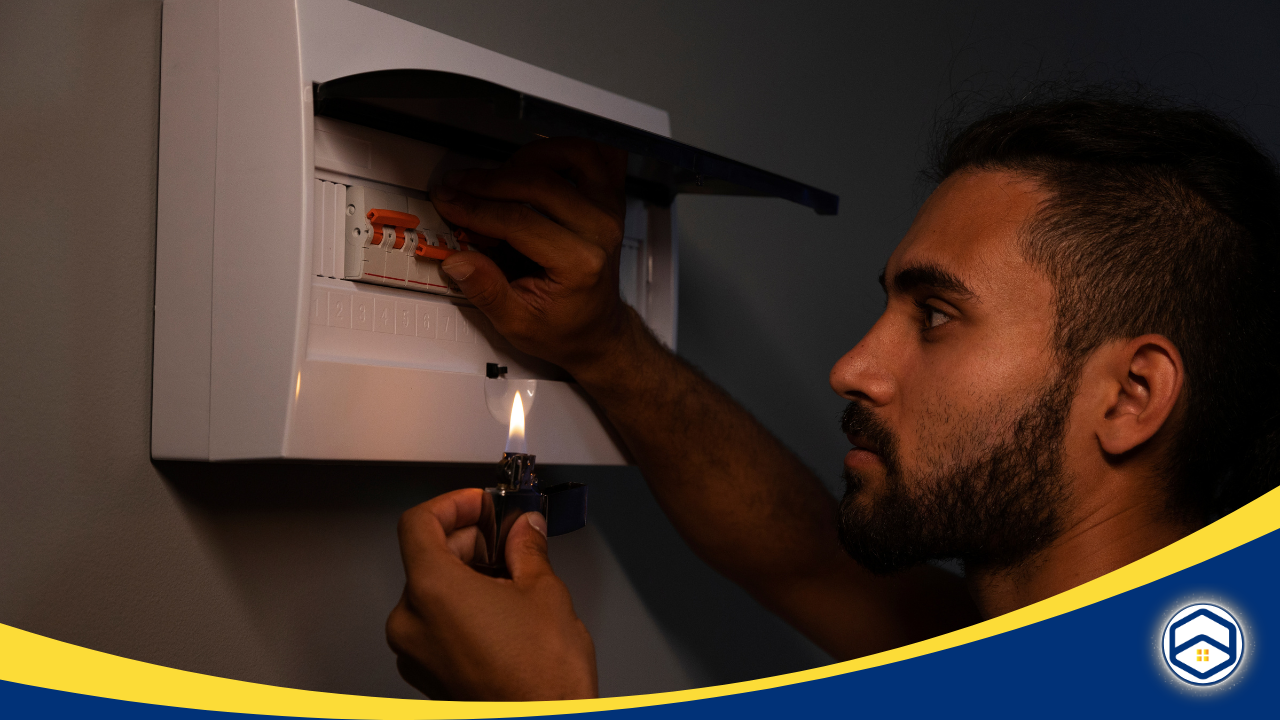
Check the apartment breaker panel only if it is safe to do so.
-
Report a utility outage to the correct electric utility.
-
Notify the landlord or property manager.
-
Record the outage start time and utility confirmation.
-
Photograph visible property or electrical damage.
-
Keep receipts for outage-related expenses.
-
Photograph or list spoiled food.
-
Save every maintenance request and management response.
-
Review your lease before assuming you can deduct costs from rent.
-
Escalate to the appropriate utility or legal resource if the problem is not resolved.
If you are a Hexa resident, the company maintains a dedicated Hexa Resident Support contact for resident issues. For renters comparing properties, you can also review Hexa available rental listings and ask specific questions about emergency maintenance procedures before signing a lease.
When should you escalate the problem?
Escalate when the evidence suggests this is more than a temporary grid outage.
Examples include a landlord refusing to address a property electrical failure, a utility disconnect caused by the landlord’s unpaid bill, or an intentional shutoff that does not appear to fit the statutory exceptions.
For utility-provider disputes, Texas renters should generally contact the provider first. If the issue is not resolved, the Public Utility Commission of Texas accepts consumer complaints and provides assistance with certain utility-service disputes. The PUC recommends giving the provider an opportunity to resolve the complaint first and then contacting the Commission if necessary.
For suspected unlawful landlord conduct, review the current Texas Property Code and the Attorney General’s renter guidance, and consider qualified legal assistance before terminating a lease, withholding rent, or deducting expenses.
Frequently asked questions
Can a landlord shut off my electricity in Texas?
Generally, a landlord cannot intentionally interrupt utility service except under circumstances allowed by Texas Property Code §92.008, such as bona fide repairs, construction, or an emergency. Special rules apply to certain landlord-controlled or submetered electric service, including notice requirements for nonpayment.
Do I automatically get a rent refund when my Texas apartment loses power?
No. A power outage does not automatically create a universal right to a rent refund. The result can depend on the cause of the outage, the lease, the condition of the property, and whether the landlord violated a legal duty. Do not simply withhold rent without reviewing the applicable law and lease.
What should I do if only my apartment has no electricity?
Notify property management or maintenance and report the issue to the appropriate utility when necessary. If the surrounding building still has power, that may indicate a unit-specific breaker, meter, wiring, or equipment problem rather than a neighborhood outage. Ask management to identify the cause and keep the maintenance request in writing.
Can my landlord make me pay for a hotel during a power outage?
Your landlord does not automatically have to reimburse hotel costs simply because the power is out. Your lease, the cause of the outage, applicable landlord-tenant law, and your insurance policy all matter. The Texas Department of Insurance says power-only outages generally do not trigger additional living expense coverage when there is no covered property damage.
Can I complain to the PUC about an apartment power outage?
You can complain to the PUC about certain electric utility issues, but the Commission is not a substitute for your apartment’s maintenance team. Report property-specific problems to management first and utility-service complaints to the provider. If the utility does not resolve the dispute, the PUC offers a consumer complaint process.
What should I check in my lease before taking action?
Look for provisions covering electricity, utility billing, emergency maintenance, repairs, casualty damage, temporary relocation, renters insurance, and termination. Texas law may provide rights that cannot be waived, but lease-specific procedures and responsibilities can still matter. The Texas Attorney General recommends reading the rental agreement carefully because it is an important source of information about the landlord-tenant relationship.
Know the cause before you decide what to do
The biggest mistake during an apartment power outage is treating every situation as though it has the same legal answer. A neighborhood storm outage, a failed building electrical system, a landlord-controlled utility shutoff, and an unpaid utility bill are different problems.
Start by identifying the cause, report the issue promptly, keep everything in writing, and review the lease before making a financial or legal decision. If you are considering a new Houston rental, ask about emergency maintenance and utility responsibilities before signing. Hexa renters can use the company’s Resident Support resources, while prospective renters can start by reviewing available Houston-area rental options.